
In the ever-evolving landscape of artificial intelligence (AI), the demand for scalable infrastructure, accessible tools, and collaborative environments is higher than ever. Traditional AI labs, often housed in physical research centers or enterprise facilities, are rapidly being supplemented—and in some cases replaced—by AI Lab as a Service (AI-LaaS) solutions. These cloud-based platforms offer on-demand access to powerful computing resources, datasets, frameworks, and development environments tailored for AI experimentation, model training, and deployment.
This blog explores the concept of AI Lab as a Service, its benefits, use cases, and the reasons behind its growing popularity across industries and institutions.
What is AI Lab as a Service?
AI Lab as a Service refers to a virtualized, cloud-hosted environment that allows individuals, teams, or organizations to access AI development tools and infrastructure without the need to build or manage physical labs. It operates on a pay-as-you-go or subscription model, enabling users to conduct research, train models, test algorithms, and collaborate remotely—anytime, anywhere.
These services typically include:
Pre-configured environments for machine learning and deep learning
Access to GPUs/TPUs for accelerated computing
Integration with popular AI frameworks like TensorFlow, PyTorch, and Scikit-learn
Secure storage and version control for datasets and models
Collaborative tools for team-based development
Whether for academic research, corporate innovation, or startup prototyping, AI Lab as a Service provides a foundation to experiment, iterate, and deploy AI solutions at scale.
Why AI Lab as a Service Matters
Setting up an in-house AI lab can be cost-prohibitive and resource-intensive. Organizations must invest in powerful hardware, manage software environments, ensure cybersecurity, and maintain compliance with data privacy regulations. This level of infrastructure is often beyond the reach of startups, educational institutions, or small enterprises.
AI Lab as a Service eliminates these barriers by offering:
Lower Capital Expenditure: Users don’t need to invest in expensive infrastructure or worry about hardware obsolescence.
Faster Setup: Developers and researchers can launch an AI-ready environment in minutes instead of weeks.
Scalability: Resources can be scaled up or down based on project needs, ensuring optimal performance and cost-efficiency.
Collaboration: Multiple users across geographies can collaborate in real-time, accelerating innovation cycles.
These advantages make AI-LaaS an ideal solution for democratizing access to advanced AI development capabilities.
Key Features of AI Lab as a Service
Cloud-Based Compute Power
One of the core features of AI-LaaS is access to high-performance computing resources, including GPUs and TPUs. These are crucial for training large-scale AI models and performing complex computations.Preloaded AI Frameworks
The environment comes preinstalled with popular libraries and frameworks such as Keras, OpenCV, Hugging Face Transformers, and more, saving users the hassle of manual setup.Notebook Interfaces
AI-LaaS platforms often support Jupyter Notebooks, Google Colab-style interfaces, or proprietary web-based coding tools that enhance usability and interactivity.Data Management Tools
Built-in tools for data ingestion, preprocessing, annotation, and visualization are essential for seamless AI workflow execution.Security and Compliance
These platforms offer encryption, access controls, audit logs, and compliance with data standards such as GDPR and HIPAA, making them suitable for sensitive AI projects.APIs and Integration Support
AI-LaaS environments often integrate with external APIs, DevOps tools, or other cloud services, supporting CI/CD pipelines and automation.
Who Can Benefit from AI Lab as a Service?
1. Educational Institutions
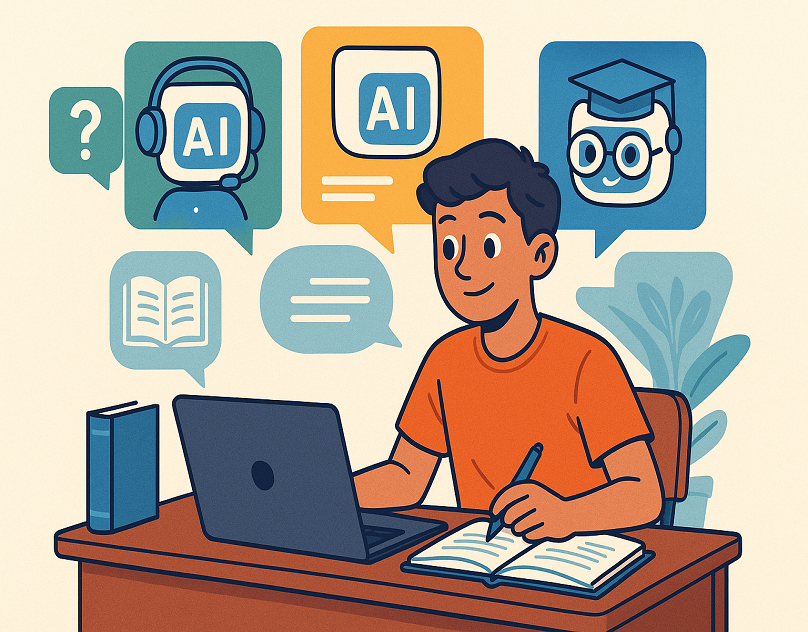
Universities and schools can offer students real-world AI development experience without investing in physical lab setups. This levels the playing field for students in underfunded regions or programs.
2. Startups and Entrepreneurs
Emerging businesses can rapidly prototype and validate AI models without upfront investment, speeding up time-to-market.
3. Enterprise R&D Teams
Corporates can set up virtual labs for internal teams, fostering innovation while maintaining security and control over intellectual property.
4. Government and Non-Profits
Public sector agencies and NGOs can use AI-LaaS to analyze large datasets, improve service delivery, and experiment with AI-powered tools for social good.
5. Freelancers and Independent Researchers
Individuals working on personal AI projects, Kaggle competitions, or academic research can benefit from affordable, accessible compute power and tools.
Use Cases of AI-LaaS
Natural Language Processing (NLP): Build and test language models for translation, sentiment analysis, or chatbots.
Computer Vision: Train models for image recognition, facial detection, and object tracking.
Predictive Analytics: Forecast trends in finance, healthcare, retail, or logistics using historical data.
AI in Education: Create adaptive learning platforms or intelligent tutoring systems powered by student behavior data.
Smart Manufacturing: Use AI to analyze sensor data for predictive maintenance and process optimization.
The Future of AI Development is Cloud-Native
As AI continues to revolutionize every facet of modern life, the need for scalable and accessible AI infrastructure becomes imperative. AI Lab as a Service provides a transformative solution that brings research-grade tools to the fingertips of anyone with an internet connection.
From democratizing AI education to accelerating enterprise R&D, AI-LaaS is empowering a new generation of thinkers, builders, and innovators. Its adoption is poised to grow, especially as the demand for ethical, efficient, and secure AI development rises.
For anyone looking to break into AI or scale their existing capabilities without the burden of physical infrastructure, AI Lab as a Service offers the ideal launchpad into the intelligent future.
Conclusion
AI Lab as a Service is more than just a technical offering—it’s a catalyst for innovation. By lowering the barrier to entry and providing state-of-the-art tools in a virtualized format, it opens doors to global collaboration, rapid experimentation, and scalable success in the field of artificial intelligence. Whether you're a student, researcher, startup founder, or enterprise CTO, the future of AI development lies in the cloud.

Write a comment ...